Search is shifting from clicks to answers. Here’s how to stay visible.
Search has changed. When someone asks Google a question now, they often see the answer at the top of the page, no clicks needed. That answer comes from someone’s website. It might be yours. It might be a competitor’s.
AEO vs SEO is how marketers describe this shift. SEO gets your website to rank in search results. AEO gets your website cited as the answer. Both still matter, and the businesses that understand the difference will keep showing up where it counts.
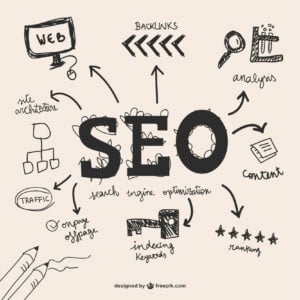
What is SEO?
SEO stands for search engine optimization. It’s how you get your website to rank in search results, usually on Google. You target the keywords your customers search for, write helpful content around them, build a fast and crawlable site, and earn links from other trusted sites.
If someone in your area searches “kitchen remodeler near me” and your remodeling company shows up in the top 3 results, that’s SEO doing its job. The person clicks your listing, lands on your site, and becomes a lead.
SEO has been the main way businesses get found online for over 2 decades. The rules around it are now expanding.
What is AEO (answer engine optimization)?
AEO stands for answer engine optimization. It’s how you get your content cited by AI tools that give direct answers, like Google’s AI Overviews, ChatGPT, Perplexity, and similar platforms.
When someone asks ChatGPT “what should I look for in a kitchen remodeler?”, the tool generates an answer in seconds and might cite 2 or 3 sources. If your site is one of them, you’ve earned visibility without the user ever clicking a link.
AEO works alongside SEO. Per Google’s own guidance on AI features, the same SEO fundamentals (helpful content, technical health, trust signals) apply. AI tools just present results differently.
The SEO vs AEO difference, explained simply
Here’s the cleanest way to think about it:
- SEO gets your page to show up in a list of links
- AEO gets your page used as the answer
Both rely on quality content, keyword research, and authority. The difference is in how the result reaches the user.
A quick example. Say someone searches “how much does a bathroom remodel cost in North Carolina?”
Old way (SEO): Google shows 10 blue links. The user clicks the top result and reads.
New way (AEO): Google’s AI Overview gives a price range right at the top, with 3 sites cited as sources. Many users get their answer and never click.
If your site was ranking #4 under the old model, you got steady traffic. Under the new model, if your site isn’t one of the cited sources, that traffic disappears. The ranking still exists, but the click doesn’t happen because the answer is already on screen.
Visibility used to mean clicks. Now it also means citations.
Want help navigating this?
AI search is changing how customers find businesses, and what worked 5 years ago isn’t enough. Our team builds proven SEO strategies for both traditional and AI-powered search.
Why AI search optimization matters now
A few realities worth knowing:
- Google’s AI Overviews now appear across a large share of US search results
- More people are starting their searches in ChatGPT, Perplexity, and other AI tools instead of typing into Google first
- For informational queries (the kind small businesses target most), AI answers are showing up at the top more often than not
For a small or mid-sized business, this is good news and bad news.
The good news: AI tools can put your content in front of qualified buyers without them ever scrolling. You become the trusted source.
The bad news: if your site isn’t structured for AI to read and quote, your competitors will be the ones cited. Most AI answers cite only 2 to 5 sources. If you’re not in those few, you’re not in the answer.

Featured snippet optimization and how it connects to AEO
If featured snippets sound familiar, you’re already partway to understanding AEO.
Featured snippets are the boxed answers Google has shown at the top of certain search results for years. They’re pulled from web pages that answer common questions clearly and concisely. Sites that earned them often saw real traffic gains.
AI Overviews and answer engines work on a similar idea, just at a much larger scale. The same content that earns featured snippets, clear questions, direct answers, well-organized headers, also tends to get pulled into AI responses.
If you’ve been doing featured snippet optimization, you’ve already been doing some of the work AEO requires.
AEO vs SEO: what to adjust on your site right now
Your SEO strategy still works. You just need to add a few new steps:
- Write content that answers real questions. Look at the questions customers actually ask in sales calls, emails, and reviews. Build pages around those exact questions.
- Use clear headers and short answers. Put a 2 to 3 sentence answer right under each H2 or H3, then expand. AI tools quote concise sections placed early on the page.
- Add structured data. Schema markup helps search engines and AI tools understand your content. FAQ, How-To, and LocalBusiness schemas are good starting points.
- Keep building authority. Citations, reviews, mentions on trusted sites, and consistent business info still matter. AI tools weigh trust signals heavily.
- Don’t forget local SEO. For service businesses, local visibility in Google Maps, Google Business Profile, and AI answers about “near me” searches is one of the most important areas to address right now.
AEO vs SEO in your business strategy
If you sell to local customers, AEO puts your business in the answer when someone searches “best [your service] in [your city].” That brings in qualified leads faster.
If you sell nationally or B2B, AEO positions your brand as the cited expert when buyers ask research questions, building trust before the first sales conversation.
Either way, businesses that adjust now will keep their visibility advantage. The ones that wait will spend years catching up.
At Get You Found, we’ve spent years helping small and mid-sized service businesses get found across Google, local search, and now AI-powered platforms.
Let’s build a strategy that keeps you visible.
Whether your customers are searching on Google, ChatGPT, or wherever AI takes search next, our team helps you show up where it matters. Schedule a free consultation and let’s talk about what your business needs.